
'What exactly is on the prime minister's mind, we do not know. But it feels like the government wants the country to be prepared for unseen challenges ahead.'

The government is identifying households with both liquefied petroleum gas (LPG) and piped natural gas (PNG) connections to enforce a ban on dual ownership, aiming to curb misuse and better target subsidies amid global energy supply disruptions.
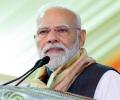
Prime Minister Narendra Modi on Sunday said the Bharatiya Janata Party-led central government is taking steps to reduce imports of crude oil and gas, focusing more on exploration of fossil fuels and green energy.


Reserve Bank of India (RBI) Governor Sanjay Malhotra stated that preventing second-round effects of supply shocks, where inflation expectations rise due to prolonged disruptions, is the primary role of monetary policy. He also defended the RBI's foreign exchange market interventions, asserting it did not commit to an 'indefensible peg'.

Mother Dairy has launched a naturally degradable milk pouch, a first in India, designed to break down in soil and reduce plastic waste. The new packaging will be used for cow milk across Delhi-NCR starting June 5th.

Benchmark indices tumbled about 2 per cent on Friday, capping one of the most turbulent weeks for domestic equities as investors fretted that the West Asian conflict could drag on for weeks or even months.

"There is a sharp jump that we have seen in bookings of EVs... The jump, at least in our case, in just two months, it is about 2 to 2.5 times of what it used to be"

Foreign secretary Vikram Misri on Friday shared key details on agreements between India and the UAE, stating that the UAE will store up to 30 million barrels of crude oil in India's strategic petroleum reserve following Prime Minister Narendra Modi's visit.
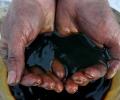
India's crude oil import bill is set to exceed $100 billion in the current fiscal year ending March 31, almost double its spending last year, as international oil prices trade at seven-year highs. India spent $94.3 billion in the first 10 months (April-January) of the ongoing financial year that started April 1, 2021, according to data from the oil ministry's Petroleum Planning & Analysis Cell (PPAC). It spent $11.6 billion in January alone when oil prices had started to surge.

There are enough people at the top decision-making level in Tehran who are still willing to negotiate, provided Trump can create the right setting for the negotiation to acquire a dynamic of its own, points out Ambassador M K Bhadrakumar.

The closure of the Strait of Hormuz has disrupted some 20 per cent of the global flows but even if it opens, damages to production facilities in the region will take time to repair, points out Sunita Narain.
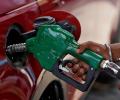
Petrol diesel price today March 20, 2026: IOCL & HPCL hike premium petrol (XP95, Speed, Power) by 2/litre and industrial diesel by 22/litre. Regular petrol in Delhi 94.77, diesel 87.67 unchanged. Full city-wise rates inside.

Despite a sharp increase in import duties on gold and silver to 15 per cent, the precious metals are trading at significant discounts in the domestic market, with gold seeing discounts of up to $200 an ounce and silver up to $6 an ounce.

Dr Amreen Sheikh, chief dietician at KIMS Hospital, recommends a list of healthy fat alternatives that you can have instead of cheese without compromising on nutrition.

Two more Indian-flagged LPG tankers have begun their journey from the Persian Gulf, navigating the Strait of Hormuz amidst regional conflict, following disruptions caused by recent tensions in the Middle East.

Indian equities on Dalal Street saw volatility as global market trends and weak rupee impacted investor sentiment. Track Sensex, Nifty50 movement and key market drivers for May 5, 2026.

Tensions escalate between Iran and the US over control of the Strait of Hormuz, a crucial shipping lane for global oil supplies, as both sides discuss extending a fragile ceasefire.

The Congress on Sunday lashed out at Prime Minister Narendra Modi over the US' statements after three Indian sailors were killed in American attacks on ships, with party leader Rahul Gandhi saying the "compromised PM" listens "like an obedient servant" and "complies with the orders".

United States President Donald Trump yet again claimed to have discussed with Prime Minister Narendra Modi about India's import of Russian oil, he told reporters on Tuesday after the Diwali celebrations at the Oval Office.

Maruti Suzuki Chairman R C Bhargava is pushing for increased government incentives for biogas-powered vehicles over hybrids, emphasising their net-zero carbon emissions and the valuable organic manure they produce, while also advocating for continued GST benefits for electric vehicles.

United States President Donald Trump on Wednesday said Prime Minister Narendra Modi had assured him that India would stop purchasing oil from Russia, describing it as "a big step" in efforts to increase global pressure on Moscow.

Iranian Foreign Ministry spokesperson Esmail Baghaei stated that Iran is instead working with Oman to establish a mechanism for the safe passage of ships through the Strait.

Indian benchmark stock indices, Sensex and Nifty, closed nearly 1 per cent lower due to surging crude oil prices, weak global market trends, and significant foreign fund outflows, with geopolitical tensions and inflation concerns further dampening investor sentiment.

'The MPC is likely to prioritise the key mandate, which is inflation, while relying on other instruments to stabilise the currency and bond markets.'
Petrol diesel price today March 20, 2026: IOCL & HPCL hike premium petrol (XP95, Speed, Power) by 2/litre and industrial diesel by 22/litre. Regular petrol in Delhi 94.77, diesel 87.67 unchanged. Full city-wise rates inside.

The people of Bihar, usually cook food in mustard oil that adds pungency. They enjoy cooking and eating, tasty and healthy food using seasonal ingredients with aromatic local spices. Garlic, ginger and green chillies play a special role.

24 Indian-flagged vessels with 677 Indian seafarers were currently located west of the Strait of Hormuz, and four vessels with 101 Indian seafarers were stationed east of the strategic waterway.

'When we start describing somebody as an enemy that is the start of politics and emotion after which no business can take place.' 'We need to get out of this, allow Indian businessmen to do business with China.'

Prime Minister Narendra Modi has strongly condemned the attacks on the United Arab Emirates' port city of Fujairah, which resulted in injuries to three Indian nationals, and reiterated India's support for peaceful resolution through dialogue.

Indian markets on Dalal Street rallied sharply as easing tensions in the US-Iran conflict and stable oil prices boosted sentiment. Track Nifty 50 and BSE Sensex performance and key global triggers.

India's merchandise exports experienced a slight decrease in February, while imports surged due to increased gold and silver purchases, leading to a widened trade deficit. The West Asia crisis is expected to further impact trade in the coming months.

'The West Asia or the Gulf crisis has shown that what we develop as national infrastructure when things are not as bad as they could be, we forget to plan for adversities.'

India, the world's third-largest oil consumer, spent 2.5 billion euro on buying crude oil from Russia in September, 14 per cent less than the previous month, a European think tank said. India remained the second-largest buyer of Russian fossil fuels in September behind China, according to the Centre for Research on Energy and Clean Air (CREA).

US President Donald Trump concluded his Beijing summit with Chinese President Xi Jinping, describing it as 'incredible' and highlighting 'fantastic trade deals' and a 'very strong' relationship between the two leaders.

'Even last year, when India bought gold, the physical quantity was much less than the previous years.'

Chinese President Xi Jinping warned US President Donald Trump that mishandling the Taiwan issue could trigger conflicts between the two countries during wide-ranging talks on trade, Iran, and energy security.
Surging global crude oil prices failed to shore up customs revenue substantially as India Inc resorted to advance licence scheme, which allows duty-free imports for value-added exports.

Tensions escalate between Iran and the US following an attack on an Iranian commercial vessel in the Sea of Oman, with both sides trading accusations over maritime security and ceasefire violations.
